

How Economic Factors Shape the UK's Remote Betting Industry

By Tobechi Obinwanne
In a compelling exploration of economic currents and their sway over leisure habits, a study by Tobechi Obinwanne at the University of Limassol, has established a nexus between the United Kingdom's GDP Per Capita, inflation rates, and the remote betting sector. Amidst fluctuating economic indicators, the relationship between a person's disposable income and their betting behaviors comes into sharper focus.

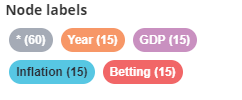 Image showing the visualization of the data nodes for each year for each of the variables
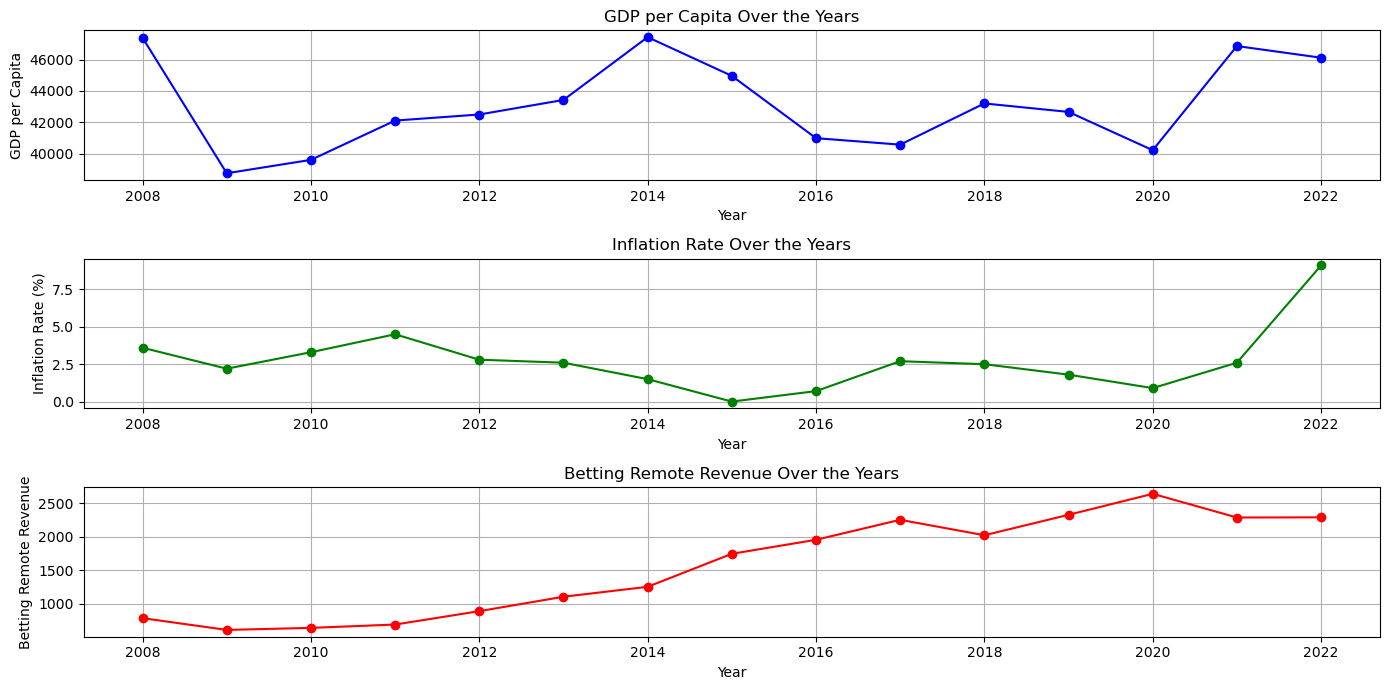 Image showing the Visualization of the trends over the time period
Economic Health as a Betting Stimulant
Data spanning over a decade reveals a nuanced picture: a slight positive correlation exists between GDP per capita and betting revenue, suggesting that economic prosperity mildly encourages increased betting activities. Conversely, rising inflation appears to dampen this enthusiasm slightly, with the study noting a small decrease in betting activities as inflation climbs, possibly due to diminished purchasing power.
The Tools of Analysis: From Correlation to Community Detection The methodology employed is meticulous. Correlation analysis helps quantify the relationship between economic growth, inflation, and betting revenues, revealing that while economic prosperity slightly boosts betting revenue, inflation nudges it in the opposite direction. Further, Network Analysis techniques such as PageRank and Community Detection offer deeper insights. They identify influential years and cluster similar periods, painting a dynamic picture of the betting landscape. For instance, recent years (2020-2022) have seen a higher influence on the betting network, likely due to the COVID-19 pandemic's economic disruptions and an accelerated shift towards online betting platforms.
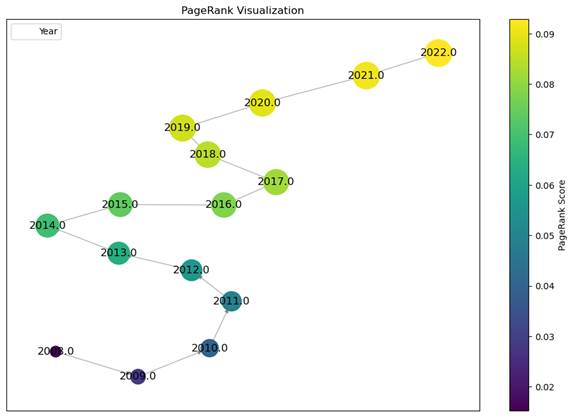 Image showing the PageRank Visualization
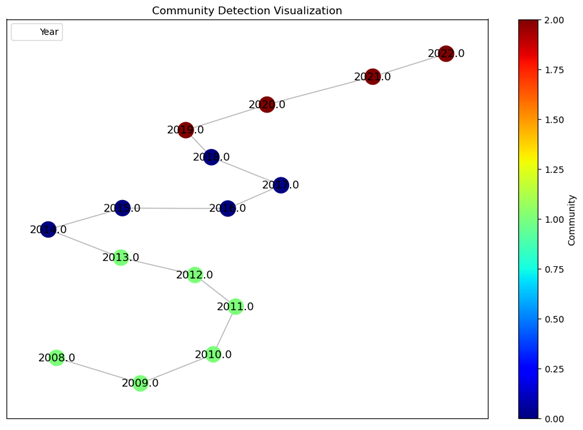 Image showing the Community Detection Visualization
Insights from Clustering The study categorizes the examined years into distinct clusters reflecting periods of economic turbulence, recovery, and growth, each with its own betting revenue patterns:
Implications and Future Directions
The study's findings hold significant implications for both the remote betting industry and policymakers. They underscore the need for strategic adaptations in response to economic and regulatory shifts. For betting companies, understanding these correlations and influences helps in tailoring their strategies to leverage economic upswings and buffer against downturns.
Policymakers, too, can draw on these insights. The slight negative impact of inflation on betting revenues suggests a nuanced approach to economic policies that consider leisure industries' vulnerability to inflationary pressures.
In conclusion, the interplay between economic health and betting underscores a broader narrative of how leisure industries not only reflect but also respond to economic environments. As the UK navigates post-pandemic economic landscapes and ongoing technological shifts, the remote betting sector remains a telling bellwether of broader economic trends and consumer confidence.